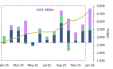
Gold Price Exploding In Emerging Markets
Buenos Aires-Argentina (Jan 28) Mainstream economists and mainstream media remain convinced that the economy and markets are in full recovery mode. Along the same lines, gold is unanimously expected to decline in the year(s) head.
One of the most recent appearances of that kind was the 2014 outlook of IMF economic counselor, Olivier Blanchard, who explained last week that global growth would average 3.7% in 2014.
Ironically, the recovery story, based on the central bank premise that they can create wealth by simply exploding their balance sheets, seems as solid as a “house of cards.” Past week Thursday and Friday, several emerging markets suffered from an economic earthquake, especially in their currency markets, which resulted in losses in most developed world markets not seen since 6 months. The Yen and the Swiss Franc were considered a safe haven, just like gold and US Treasury bonds.
Bloomberg says this is the worst selloff in emerging-market currencies in five years, revealing the impact from the Federal Reserve’s tapering of monetary stimulus. “Investors are losing confidence in some of the biggest developing nations, extending the currency-market rout triggered last year when the Fed first signaled it would scale back stimulus. While Brazil, Russia, India, China and South Africa were the engines of global growth following the financial crisis in 2008, emerging markets now pose a threat to world financial stability.”
Argentina, Venezuela and Turkey have been hit hard. Argentine’s Peso and Turkish Lira lost significant value against other major currencies in the past week. They recovered slightly today.
In Argentina, the central bank pared dollar sales aimed at propping up the peso to preserve international reserves that have fallen to a seven-year low. “The central bank said it would lift two-year-old currency controls and allow the purchase of dollars for savings starting next week. […] The government told today it isn’t intervening in the peso’s decline, allowing the market, which is mostly closed to buyers of dollars, to adjust prices. It wasn’t a devaluation induced by the state. For the lovers of free markets, supply and demand was expressed in the capital markets yesterday.”
The Turkish central bank tried an unscheduled intervention in the market to stop the lira from falling to record lows, something they haven’t done since two years. “Investors are speculating the central bank’s efforts to prop up the lira by burning through foreign-exchange reserves will prove futile without raising interest rates.”