Gold to Stocks Are Predictable on Jobs Day Until recently
San Francisco (Apr 6) Past performance is no guarantee of future returns, goes the mantra on countless fund prospectuses. Yet much of Wall Street seems to be employed to analyze just that: how to use the past to predict the future.
And days like today, when the government releases its monthly jobs report, are a good test case. Both gold and stocks had reacted in a remarkably predictable manner, at least before today.
To start with stocks, it was quite simple. The Standard & Poor’s 500 Index (SPX) rose on jobs days no matter what in the past year, whether it was a number that blew away consensus estimates or a disaster like January, when economists were looking for 197,000 jobs and only 74,000 were delivered. It wasn’t a huge rally every time yet in terms of a simple black-or-red roulette bet, you could count on some sort of gain in the index on jobs day for 11 straight months in a row -- until today, when stocks fell.
Gold’s performance also has been predictable on jobs days, though not in the same way and only in retrospect after the government’s number came out. Gold rose when the number of jobs added to the economy trailed the median economist estimate in Bloomberg’s survey. When the jobs number beat, gold fell. It’s true today and it’s been true every month in the past year except for the release in August, when the gold price barely budged.
Gold, Economy
The relationship held true even in the second half of last year when gold was in a bear market following a 12-year bull run that left many investment portfolios wearing more of the precious metal than Mr. T on a first date.
In the past year, investors have appeared to be selling gold when the economic data comes in better-than-estimated and buying when it misses.
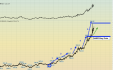
Even while stock investors were willing to chalk up disappointing reports to the harsh winter weather, gold has shown a negative correlation to the Bloomberg ECO U.S. Eco Surprise Index that measures how much economic data is beating or missing expectations. While not a strong correlation, it has been consistently negative as worse-than-expected data coincided with a 15 percent rally in gold from the end of last year through March 14.
The economic surprise index started the year off poorly and reached minus 0.485 in February, which means data was missing estimates by the most in two-and-a-half years. It’s recovered since and gold is down more than 5 percent from its 2014 peak in March. Treasury yields also fell at the start of the year and have inched back up.