Gold Price Inches Up Ahead Of Fed Meeting, but NatGas outperforms
New York (Jun 13) Commodities were evenly divided between winners and losers this week.
Commodities were split down the middle this week as energy outperformed, while grains, silver and palladium underperformed. At the same time, the stock market was essentially unchanged on the week, leaving the S&P500 up 1.8 percent since the start of the year.
Macroeconomic Highlights
Interest rates were in focus all week as global yields jumped to their highest levels in months.
The U.S. 10-year yield rose as high as 2.49 percent, while the German 10-year yield hit 1.06 percent. Both backed off their highest levels but remained volatile ahead of the Fed meeting next Wednesday. The central bank is not expected to hike rates at this upcoming meeting, but may signal it will make the first move as soon as September.
This week's U.S. economic data bolstered the case for a rate hike this year. The Commerce Department reported retail sales jumped 1.2 percent in May, a solid figure.
Separately, the Bureau of Labor Statistics said that the U.S. Producer Price Index rose by 0.5 percent in May, the fastest rate since 2012. At the same time, the core PPI (which excludes food and energy) grew by 0.1 percent. On a year-over-year basis, the headline PPI was down by 1.1 percent, while the core PPI was up by 0.6 percent.
Last but not least, in the eurozone, negotiations between Greece and its creditors reached a major stumbling block Friday when the International Monetary Fund (IMF) negotiators walked out of bailout talks.
"[The move] clearly sends a signal to the Greek government that the stakes are very high and there is very little room for more concessions from the IMF side," Jakob Christensen, senior economist at Exotix, told CNBC. "They [the IMF] have moved quite a lot since the start of discussions, both on the fiscal targets and labor market reforms, and now they're not prepared to go further.
"Sources say that key eurozone members such as Germany are preparing for a Greek exit from the monetary union if a deal is not struck soon. The country
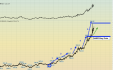
Gold managed to eke out a fractional gain on the week despite the spike in yields. A drop in the U.S. dollar and concerns about Greece aided the yellow metal. Still, the yellow metal remains firmly in its recent trading band.
If Greece unexpectedly drops out of the eurozone, gold could see a sudden spike. Otherwise, the inevitable hike in U.S. interest rates in the coming month may pressure prices down to the cycle low of $1,131.
•Crude oil rallied this week thanks to a larger-than-expected withdrawal from inventories reported on Wednesday. On the flip side, yet another 40-year high in U.S. production discouraged traders from bidding prices up too much.
The International Energy Agency lifted its supply and demand forecasts for 2015. In its latest Oil Market Report, the IEA said that global demand growth is expected to surge a whopping 1.7 million barrels per day in the first half of the year and 1.4 million barrels per day for the year as a whole.
However, the supply side is growing even faster, said the IEA. Global supply was up 3 million barrels per day year-over-year in May, split evenly between OPEC and non-OPEC producers.
"Changing market expectations-as opposed to current conditions-may ... explain the seeming divergence between prices and fundamentals," explained the IEA. "Supply responses are inevitably delayed, and the looming impact of oil companies' recent spending cuts, while not fully apparent, may already be baked into prices.
"The IEA also speculated that "product imbalances have likely been a key factor behind recent oil price strength, and that particular source of support might soon wane as long-delayed refineries eventually reach full production.
"However, the agency left open the possibility that "current markets could thus be tighter than reflected in recent data."
Source: SeekingAlpha