US Dollar Bulls Must Be Patient as Economic Data Void Slows Advance
New York (July 21) Dollar bulls hungry for more gains after the currency reached a three-month high may need to be patient.
The dollar weakened for the first time in five days versus the euro as traders consolidated positions amid a void in U.S. economic reports and a seasonal lull in trading. Those declines look set to reverse as the Federal Reserve meets next week to consider raising interest rates, diverging from central banks in much of the world.
“We’re finally seeing some profit-taking catch up with the dollar, which isn’t surprising given its robust gains from last week and how the calendar has hit the pause button,” said Joe Manimbo, an analyst at Western Union Business Solutions, a unit of Western Union Co., in Washington. “A lot of people have headed to the beaches and have pared back on meaningful currency positions.”
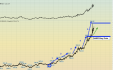
The Bloomberg Dollar Spot Index, which tracks the greenback versus 10 of its major peers, fell 0.2 percent to 1,208.13 as of 9:29 a.m. in New York, after reaching 1,212.02, a level not seen since April 13.
The dollar weakened 0.5 percent to $1.0877 per euro, after reaching an almost three-month high of $1.0809 on Monday. It was little changed at 124.33 yen.
A measure of the greenback’s momentum, known as the 14-day relative strength indicator, closed at 69.9 Monday, near the 70 level some traders view as a signal the currency is overbought. Options prices, however, suggest the dollar will strengthen against every major currency except the yen in a month.
Dollar Pause
In an interview on Fox Business Network on Monday, St. Louis Fed President James Bullard said there’s a more than 50-50 chance the central bank will raise interest rates in September. That contrasts particularly with Europe, where the region’s central bank is engaged in an unprecedented bond-buying program.
“The dollar has been doing very well over the past days and weeks, hence it could even be some profit-taking,” Petr Krpata, a foreign-exchange strategist at ING Groep NV in London, said of Tuesday’s dollar depreciation. “The Fed moving to a rate hike and the European Central Bank reiterating that it will complete the QE program means very clear downside prospects to euro-dollar.”
Fed funds futures show a 38 percent chance the central bank will increase its benchmark rate in September from virtually zero, up from 31 percent a week ago, and a 71 percent chance by December, up from 65 percent, according to data compiled by Bloomberg.
Commodity Consolidation
The U.S. currency has gained the most among 10 developed-nation peers over the past month, Bloomberg Correlation-Weighted Indexes show.
Until the dollar resumes its upward trend, Latin American currencies are consolidating after an index of the tenders dropped to a record low on Monday. A decline in commodity prices is hurting growth expectations for oil-exporting nations, dragging Mexico’s peso to 16 per dollar for the first time since its 1993 revaluation.
“U.S. rates will indeed move higher this year, as early as September,” said Peter Kinsella, a senior currency strategist at Commerzbank AG in London. “That’s helping the dollar. For Latin America in general, you have a situation where terms of trade declined significantly due to commodity-price falls. So LatAm currencies are being hit from two fronts.”
Source: Bloomberg