Gold’s Upside Bias Remains Firmly Entrenched as War Clouds Gather
LONDON (March 2) The big news regarding the attacks on Iran and its retaliatory strikes meant that both gold and oil markets were both certain to gap higher today and so it has proved. The risk off response from equity markets also make sense as the bug oil jump is bad news for oil-importing regions like the eurozone, India, China and Japan. The US dollar has unsurprisingly come out on top in the FX but that hasn’t been enough to outweigh the impact of haven flows into gold. Heading deeper into the week, much will now depend on how the Middle Situation evolves, which will have implications for global markets, especially gold and oil, and by extension the dollar. This makes the near-term direction of gold difficult to predict but without any signs of diplomacy replacing the war, gold’s path of least resistance should remain to the upside for the time being. Come the end of the week, we will have the US jobs report to provide the next directional move for the forex markets. Hopefully things will have calmed down in the Middle East by then, and the focus will shift back to data.
The Month That Was
February was an interesting month for gold, starting on a shaking footing following that BIG plunge at the end of January, which inevitably prompted talk that the rally has run its course. Interesting, the first day of the month also happened to be the low, and so judging by price action alone this month, and not to mention the lack of significantly bearish drivers, the path of least resistance remains to the upside. Much of the drivers supporting gold in recent times, continue to remain in place, not least haven demand and central bank buying. For the reason, gold’s outlook remains positive.
Central Bank Demand and Geopolitics Support Gold
For a number of years now, central banks have been accumulating gold into their reserves, particularly across emerging markets as efforts to diversify away from the US dollar have accelerated. Central banks from China to Poland have all been adding aggressively and while the pace of buying has slowed for some central banks, they have nevertheless continued to accumulate gold reserves, with central banks largely being price insensitive. They are not chasing short-term rallies nor panicking on dips, it seems. As long as geopolitical tensions persist and trust in the neutrality of reserve assets remains strained, it is difficult to envisage a sudden collapse in central bank buying.
And at present, the global backdrop provides plenty of it. Renewed tensions in the Middle East, trade frictions, tariff threats and unpredictable policy shifts are all contributing to a more fragile investment climate. The recent trouble in tech stocks amid ‘AI scare trade’ have also contributed positively to the bullish gold forecast.
Gold Technical Analysis

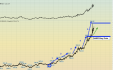
Higher lows in gold prices means the path of least resistance is still to the upside, although the weekend gap may eventually be filled. For today, the strength of the US dollar is the only reason I can think of that might help close that gap, as I don’t see a sudden de-escalation in the Iran conflict. Still, at elevated price levels, the market psyche changes where traders may not feel comfortable holding gold for long periods, especially with that gap not being filled. Key levels to watch on the downside include $5250, the first line of defence now for the bulls following the breakout last week. Below that $5205 is the next key level, and then $5100 a major resistance-turned-support level. On the upside, the $5400 level was now being tested, above which you have the $5490-$5,000 area as the next potential area of trouble, where the prior sell-off at the end of January started. The all-time high comes in at just north of the $5600 level.
Investing.com