Euro Union economy stagnates on investment slump
Frankfurt (Sept 9) Euro-area investment fell in the second quarter for the first time in more than a year, reflecting the gloomy outlook presented by Mario Draghi on Thursday as he unveiled new European Central Bank stimulus.
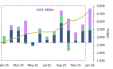
The economy stagnated in the three months through June as investment fell 0.3 per cent, data showed on Friday.
Consumer spending and exports rose, while change in inventories subtracted from gross domestic product.
“The breakdown was a little less bad than it might have been,” said Jonathan Loynes, chief European economist at Capital Economics in London. “But it is not clear that this provides a foundation for stronger growth ahead. The recent fall in consumer confidence casts doubt over whether household spending will continue to grow.”
The ECB unexpectedly cut interest rates yesterday and said it’ll buy assets as it battles to revive flagging confidence in the economy. Draghi, who held off starting sovereign bond purchases for now, is struggling to boost below-target inflation against a backdrop of near-record unemployment and conflicts in the Having led the currency bloc out of its longest-ever recession, Germany’s economy shrank 0.2 per cent last quarter in its first contraction since the start of 2013, today’s data confirmed. While a separate report today showed German industrial production climbed more than economists forecast in July, a manufacturing index by Markit Economics fell to an 11-month low in August. Euro-area inflation slowed to 0.3 per cent last month, a fraction of the ECB’s 2 per cent goal, and Draghi said yesterday that price expectations have worsened. The central bank lowered its benchmark and deposit rates by 10 basis points to 0.05 per cent and minus 0.2 per cent, respectively.
The rate cuts mark the bottom line for conventional monetary policy. Declaring that the ECB can now reduce them no more, Draghi committed to buying so-called asset-backed securities and covered bonds in the hope that will funnel cash into the economy.
The ECB also lowered its 2014 and 2015 GDP forecasts yesterday and now sees growth of 0.9 per cent and 1.6 per cent. Inflation is seen averaging 0.6 per cent this year instead of 0.7 per cent previously. The inflation outlook for 2015 was unchanged at 1.1 per cent.
From a year earlier, the euro-area economy grew 0.7 per cent in the second quarter, down from a 1 per cent rate in the previous three months, according to today’s report.
Companies have reflected the bleaker outlook. Germany’s VCI chemical trade group, which represents firms including BASF SE and Lanxess AG, said sales and production this year will be lower than previously anticipated as industrial customers curb production. Vinci SA (DG), Europe’s biggest builder, cut its 2014 sales forecast amid falling demand in France and in UK construction.
“Survey data available up to August indicate a loss in cyclical growth momentum, while remaining consistent with a modest expansion,” Draghi said yesterday.
France stagnated last quarter and Italy succumbed to its third recession since 2008. At the same time, the Spanish (SPNAGDPQ) economy expanded at the fastest pace since 2007, and the Netherlands and Portugal returned to growth.
Source: GulfToday.AE