Gold could hit $5,000/oz in 2026 once the rally resumes, silver may reach $62/oz despite weaker demand
NEW YORK (December 8) Central bank buying, fears of fiscal dominance and strong investment demand will drive gold higher in the second half of 2026, while silver is likely to see demand wane in key areas, but could still follow gold higher, according to Heraeus.
In their 2026 Precious Metals Outlook, Heraeus analysts warned that precious metal prices will likely trend lower for at least the first part of 2026.
“The rally that has seen gold and silver at record highs and PGM prices at their highest level in years, took prices too high too quickly,” they said. “While prices could push higher in the near-term, once the momentum wanes a period of consolidation likely. The gold price traded sideways from April to August this year before the most recent leg higher, so it could take several months before the rally resumes.”
The analysts said that while investment demand helped drive prices higher, physical flows of metal to the United States were also a factor, as they impacted liquidity. “There remains some uncertainty over whether PGMs could be tariffed in some way because the US is still pursuing a Section 232 investigation as well as an anti-dumping case against Russian imports,” they wrote. “Any change could cause further stock movements and price volatility.”
They believe gold will likely have the firmest price base as central bank buying continues. “Lower interest rates could also be supportive of gold if inflation remains sticky and real interest rates decline,” the analysts said. “The high price is denting silver demand in a number of sectors, but if gold moves higher, silver is likely to follow.”

And while the platinum market looks to be the tightest of the major PGMs in 2026, Heraeus analysts said lower demand will result in a smaller deficit. “This is also the case for palladium and rhodium owing to the ongoing decline in sales of combustion engine light vehicles as BEVs continue to gain market share,” they wrote. “Of the small PGMs, ruthenium has a tighter market than iridium as the data center buildout supports hard disk drive demand, although here too the price may have got ahead of itself.”
Downside price risks in the precious metals market remain,” the analysts added. “The US Treasury yield curve uninverted more than a year ago and so a recession in the US could be expected to start soon, and the weakening job market fits with a deteriorating economic outlook,” they cautioned. “If a recession arrives in 2026, then the PGM prices are likely to trend lower.”

In their detailed gold forecast, Heraeus analysts said further price upside is still possible in 2026 following a period of consolidation.
They characterized the bull market rally to date as “excessively enthusiastic,” and said that while any of the drivers remain in place for 2026, “a period of consolidation is likely” after such a dramatic price increase.
The analysts do not expect central bank gold buying to taper off in the coming year. “This year, central bank gold purchases are robust but lagging behind the rate of the last three years when more than 1,000 tonnes of gold was added to reserves annually,” they wrote. “The trend to de-dollarization in some parts of the world will continue to be a driver. The World Gold Council’s annual survey of central banks indicated that 43% thought their gold holdings would increase and most said they would decrease dollar holdings for gold or other currencies.”
Jewellery demand, on the other hand, could remain constrained due to high prices. “In almost every country, gold jewellery purchases have been weaker in 2025 owing to the high gold price,” they said. “If the price retreats far enough, then purchases could pick up, but overall jewellery demand is likely to remain subdued compared to previous years.”
Heraeus believes that inflation could remain higher for longer after the budget deal ended the U.S. government shutdown. “The concern is that fiscal dominance will be the result, with monetary policy used to keep interest rates low to help finance the spending and potentially even monetize the debt,” the analysts said. “President Trump has been critical of Fed policy and will be able to nominate a new chairman when Jay Powell’s term ends in May 2026, making it likely that someone whose thinking is more in line with the President’s will be chosen. That might leave inflation to run above the 2% target, which would reduce the debt burden in real terms, meaning that real interest rates will be negative, which is typically a good time to own gold.”
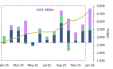
And even if there is some profit-taking in the near term, investment demand is expected to remain robust in 2026. “Bar and coin demand has continued to grow and ETF investors sharply increased their holdings this year, purchasing an additional 14.7 moz, after very modest additions in 2024,” they noted. “That has lifted global ETF holdings by 18% to 97.5 moz, but, while the gold price has been reaching record highs, ETF holdings are still below their highest level, which was 111 moz in 2020. That shows that there is some room for ETF investors to increase their gold holdings.”
Heraeus projects the gold price to trade between $3,750 and $5,000 per ounce in 2026. “The US has so far avoided the recession indicated by the Treasury yield curve uninverting last year; however, the labor market is weakening,” they warned. “The Fed usually favors supporting the economy, so if the labor market stays weak, more rate cuts will be forthcoming even if inflation remains above target. This reduces the real interest rate, which is typically positive for gold. However, after such strong price appreciation in 2025, a period of consolidation is anticipated before the rally resumes.”

Turning to silver, the analysts said a number of demand areas are set to struggle in 2026.
They noted that silver prices hit all-time highs in December following a liquidity squeeze as metal moved from London to New York. “Rising ETF inflows and a rush of retail investor demand in September and October tightened the market and caused lease rates to surge higher and the price to hit a new record,” the analysts wrote. “The tightness appears to have shifted to China after outflows of silver back to London. However, after such a rapid ascent, the price could spend some time digesting those gains.”
They also project photovoltaic silver demand will decline in 2026 as thrifting outweighs installation growth. “After several years of significant growth, photovoltaic (PV) installation growth is predicted to slow to about 1% in 2026 following policy changes in China, the largest market,” they said. “At the same time, the high silver price has reinvigorated efforts to thrift silver in PV systems. This is occurring on a number of fronts, including printing finer contacts, changes in the cell design and by attempting to use cheaper metals. Other industrial demand tends to grow broadly in line with the growth in the global economy, which is muddling through with modest growth despite the US tariffs that have complicated the trade outlook.”
Like gold, high silver prices have dampened jewelry and silverware demand, and Heraeus expects this will continue in 2026. “India accounts for about 40% of global silver jewellery demand and around two-thirds of the silverware market, and consumers have been unable to afford as much silver as the price has climbed,” they said. “The country imported 14% less silver in the year to October year-on-year.”
The analysts also expect higher silver prices to drive recycling rates up. “Even if the silver price slides from its current level, the average price in 2026 is likely to be higher than in 2025 and higher prices tend to encourage greater recycling,” they wrote. “Most silver is produced as a by-product at gold, copper and lead/zinc mines. Mine output for each of these metals is expected to expand modestly in 2026, suggesting that silver output is also likely to rise.”
“Demand growth in 2026 could be reliant on investment, with declines anticipated in silverware, jewellery, photographic and photovoltaic demand, and lackluster industrial demand,” they predicted. “That said, strong investment interest in silver is not a given as it has been variable in 2025. The rising price has a dampening effect on coin sales, which are priced at a premium to bars and are bought as much for collectability as investment. Bar demand has varied depending on the country, with retail investors in India, in particular, enthusiastically buying as the price rallied. ETF holdings rose by 17%, from 716 moz at the start of the year to 835 moz in October, before some profit-taking set in.”
Heraeus forecasts the silver price to trade between $43 and $62 per ounce in 2026. “Ultimately, silver is a higher beta, i.e. more volatile, investment than gold,” the analysts said. “The drivers of the gold price, namely, economic and geopolitical concerns, US fiscal and monetary policy, central banks cutting interest rates, and their impact on the US dollar, will also influence the silver price. If gold’s rally resumes, then silver is likely to follow.”
KitcoNews