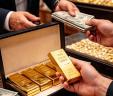
Gold: A Gift for Kings and the Divine


Gold is a gift fit for a king.
In fact, according to biblical accounts, it was the first gift offered to the “King of Kings."
If you have any Christian background at all – and even if you don’t – you probably know the story of the Three Wisemen. Magi. According to the account in Matthew, the Magi followed a star from the East to behold the “King of the Jews."
In the ancient world, Magi was a term often associated with astronomy/astrology, dream interpretation, and priestly wisdom, so it makes sense that they would have been intrigued by the sudden appearance of a star.
The Magi were most likely from Persia or perhaps Babylon, and they were probably familiar with Hebrew prophesies calling for the birth of a messiah. Their journey was quite intentional.
The gifts of gold, frankincense, and myrrh were also intentional and rich in symbolism for those of us who embrace the Christian faith.
Gold represents Christ’s position. He is proclaimed as “the King of Kings." Gold has long been a symbol of royalty. It represents wealth, power, and in ancient cultures, it also symbolized wisdom.
Frankincense is an incense that was used in worship, so this represents Christ’s divinity.
And myrrh was used for embalming, representing Christ’s human nature and prophesying his death.
Did you know that the gifts that were given to Jesus are thought to still exist?
Based on the historical record and church tradition, the gold, frankincense, and myrrh are in the Monastery of St. Paul on Mt. Athos in Greece.
How did the gifts end up there?
According to tradition, Mary kept the gifts in her care most of her life. As she neared her death, she entrusted the gold, frankincense, and myrrh to pious women in the church at Jerusalem. The gifts remained in the city until the reign of Emperor Arcadius (395-408 AD).
Recognizing their religious significance, Arcadius transferred these sacred relics to the capital of the Eastern Roman Empire, Constantinople, where they were placed for public veneration. The gold, frankincense, and myrrh became symbols of the empire's commitment to the Christian faith.
In 1204, crusaders sacked Constantinople. As the army approached, the gifts, along with other holy relics, were moved to Nicaea for safekeeping and remained there for about 60 years. Nicaea served as a refuge for the exiled Byzantine court and a symbol of resistance against the Crusaders.
Once the Crusaders moved on, Emperor Michael Paleologos returned the gold, frankincense, and myrrh to Constantinople, where it remained until the city fell to the Ottoman Turks in 1453.
As fate would have it, Sultan Mourat II was married to a Sebian woman who was a Christian. She was given the gifts and eventually presented them to the St. Paul Monastery, where they have been preserved to this day.
So, what does the gold look like?
The yellow metal was formed into 28 flat tiles of various shapes (rectangular, trapezoidal, polygonal, etc.). These tiles are generally 2x3 inches, but their varying shapes make nailing down the exact size difficult. Each tile is carved with intricate designs.

I tried to figure out exactly how much gold we’re talking about, but couldn’t find any source with that info, so my wife, ChatGPT, and I tried to guestimate. We made an educated guess about the thickness of each tile and assumed they are formed from 24-karat gold. Using the average dimensions and our estimated thickness, we came up with about 240 ounces if the plaques are close to solid. They don’t look like they are, and given the non-rectangular shape, we’ll know some off and say around 200 ounces. At $4,500 an ounce, that’s worth about $900,000.
Not a bad gift for a baby, huh?
As I said, gold is a gift fit for a king.
Gold (and silver) is also a good gift for your loved ones. It’s not too late to give the gift of real money, even though it’s Christmas Eve. After all, there are 12 days of Christmas!
********
 Mike Maharrey is a journalist and market analyst for MoneyMetals.com with over a decade of experience in precious metals. He holds a BS in accounting from the University of Kentucky and a BA in journalism from the University of South Florida.
More from Gold-Eagle