Gold Extremes’ Drawdowns


Gold just soared to some of its most-overbought levels on record, climaxing its largest cyclical bull ever. That was followed by one of gold’s worst down days in history, formally slaying that monster bull. That popular-speculative-mania topping means a serious reckoning is underway. Gold’s drawdowns after past extremes offer insights into the likely magnitude of the carnage traders need to gird themselves to expect.
Since 2000, I’ve written 1,212 of these weekly web essays. That discipline has led to a well-established workflow to release them on time. Wednesday mornings I decide on relevant topics, then that day I do all the necessary research including building spreadsheets and charts. The essays are written and proofed on Thursdays, finalized by that day’s close. Then Friday mornings I do one final quick proofread before publishing.
Last Thursday the 29th, it was a different world when I penned an essay warning about gold’s popular speculative mania. Gold closed at an all-time record high of $5,394 that day, its eighth in as many trading days. In that short span alone, gold had soared an astounding 17.6%! That annualized to a ludicrously-unsustainable 550% ascent pace! So I took a hardline contrarian stance in my conclusion that day...
“The bottom line is gold has soared into a dangerous popular speculative mania. Gold’s recent ascent pace is absurd and wildly-unsustainable, driving its most-extreme overboughtness since January 1980’s notorious bubble. That sure didn’t end well for gold, nor did the handful of bull toppings where it was more overbought way back in the 1970s. Extreme technicals and herd sentiment portend imminent reckonings.”
“These have proven big-and-fast selloffs on the order of 20% to 30%, which are necessary to rebalance away mania extremes. While brutal-enough for gold, silver and gold stocks really amplify its big losses catastrophically cratering. Popular speculative manias never last long, their frenzied fear-of-missing-out chasing buying soon burning itself out. The subsequent big symmetrical selloffs are violent and unforgiving.”
Fortuitously from a timing standpoint, heavy Chinese selling erupted overnight into Friday the 30th. That essay was released that morning, and by the time the dust settled in US trading gold had plummeted an eye-popping 10.3% that day alone! That proved its third-worst daily loss since 1971 in US-dollar terms, which effectively means ever. For all intents and purposes, dollar-gold history was born in August 1971.
That’s when Richard Nixon catastrophically severed the US dollar from its essential gold standard. That unleashed the near-total dollar devaluation and relentless price inflation ever since. Before January 1934, the dollar gold price was hard-pegged at $20.67 per ounce. Franklin Roosevelt then devalued the dollar to $35.00 per ounce, where it mostly remained until August 1971. Only since then are gold prices market-driven.
Had gold kept surging rather than collapsing last Friday, interest in my contrarian essay would’ve been low. But there’s nothing like a top-0.02% down day to galvanize traders to reconsider their to-the-moon outlooks. Since 1971, that 10.3% plummeting was only behind a 13.2% crash in January 1980 and another 12.1% one in February 1983! The main question I heard from readers since is “how bad could this get?”
The most-rational and conservative way to illuminate that is analyzing drawdowns after gold’s past extreme toppings. In the vast 55.1-year span since January 1971, gold has weathered every kind of market environment imaginable. Gold’s trends can be broken down empirically by looking at 10%+ closing moves in one direction before 10%+ countertrend reversals end them. There have been lots of those!
In this effective entire dollar-gold history, it has enjoyed 32 cyclical bulls with 20%+ gains. There were also another 10 smaller 10%+ uplegs that fell short of achieving bull status. Those were punctuated by 17 cyclical bears with 20%+ losses, and an additional 24 10%+ corrections. Bulls or uplegs are always inevitably followed by bears or corrections, markets are forever-cyclical. The latter are often proportional.
Unbelievably in the 27.8 months between early October 2023 to late January 2026, this latest gold bull powered a jaw-dropping 196.4% higher! Gold nearly tripled in that span without a single 10%+ correction, which is wildly-unprecedented. That makes gold’s epic monster cyclical bull that just topped the biggest-ever by far in US-dollar terms! As this table of gold’s top-25 bulls since 1971 shows, nothing else is even close.
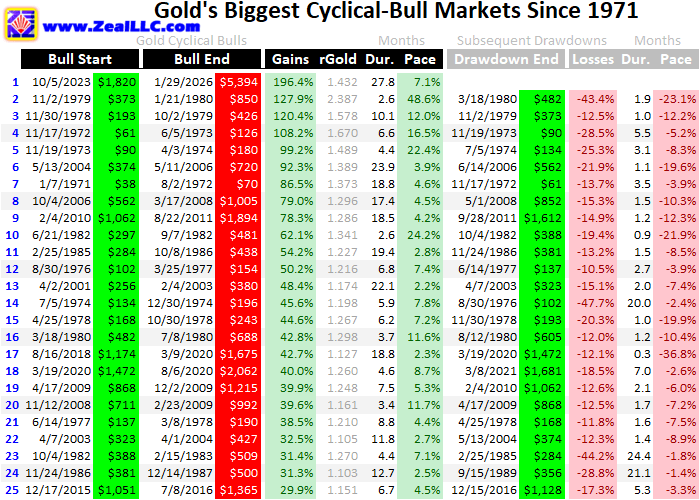
Gold’s prior biggest cyclical bull was a 127.9% moonshot into January 1980, which continuously held that record for a whopping 45.8 years until mid-October 2025! As I explained last week before gold plunged, that was an infamous bubble topping climaxing a dangerous popular speculative mania. Soberingly gold wouldn’t regain that January-1980 peak of $850 even in nominal terms until 28.0 years later in January 2008!
Gold’s reckoning out of that last mania climax was brutal, plummeting a skull-crushing 43.4% in just 1.9 months! Holy freaking cow that would be painful. But thankfully that terminal surge into January 1980 was far more extreme than recent months’. Gold’s ascent pace during that known-bubble cyclical bull was 48.6% per month, the most extreme ever! Today’s bull cresting last Thursday averaged just 7.1% monthly.
That’s considerably milder than gold’s third-to-fifth-largest cyclical bulls averaging 16.9%, but still much sharper than its sixth-to-ninth-biggest ones averaging 4.3%. But all those and indeed all 24 previous bulls in this table were followed by big-and-fast drawdowns. Gold’s next-five-biggest cyclical bulls after today’s averaged massive subsequent selloffs of 26.3% in just 2.5 months! A similar drawdown today would be rough.
From last Thursday’s peak, a 25% cyclical bear today would slam gold way back down near $4,045. That would seriously hurt gold investors, but they could weather it. The real problem is what such a big gold reckoning would do to the rest of the precious-metals complex. Silver tends to about double material gold moves, while the major gold stocks of the leading GDX sector ETF tend to amplify their metal by 2x to 3x!
While gold was in a popular speculative mania last week, that was still way less extreme than January 1980’s notorious bubble. So to be more conservative and dilute its drawdown’s impact on averages, consider the reckonings after gold’s next-ten-biggest cyclical bulls after today’s. Those still averaged hefty 20.8% losses over just 2.1 months! A similar 20% one today would hammer gold near $4,315 by late March!
Such carnage would imply silver collapsing 40%ish and GDX between 40% to 60%! Such horrendous losses would be unrecoverable for older investors nearing retirement, and an existential threat for any speculators employing any leverage at all. One hallmark of popular speculative manias is surging use of leverage, which was sure evident in gold’s crazy fear-of-missing-out momentum-chasing buying in January.
As of Wednesday’s data cutoff for this essay, gold had already plummeted 13.3% in just two trading days as of this Monday! So a 20%-to-25% total drawdown sure doesn’t sound like a stretch. Cyclical bulls are followed by often-proportional cyclical bears because bull toppings’ extreme technicals and sentiment need to be rebalanced. Excessively-stretched prices need to normalize, and outsized herd greed bled off.
This latest gold bull was not only the largest ever by far, but also peaked at some of dollar gold’s most-overbought levels ever. While various overbought-oversold indicators exist, my favorite is a simple one I developed for trading gold stocks over two decades ago. It is simply calculated by dividing gold’s close by its underlying 200-day moving average, which yields a multiple that I called Relative Gold or rGold.
That renders gold off its baseline 200dma in constant-percentage terms. Charting these multiples over time reveals trading ranges, with often-well-defined extreme-overbought and extreme-oversold zones. 200dmas are ideal baselines to measure gold’s stretchedness, because they move slowly yet still evolve with changing prevailing gold prices. Last week’s essay included an updated rGold chart and analysis.
Last Wednesday the 28th, gold had soared an unbelievable 43.4% above its 200dma on close! As I warned last Thursday before gold’s selling hit, that 1.434x rGold read was a wild 45.9-year secular high in overboughtness! Gold hadn’t stretched way up to such extremes since all the way back in early March 1980! That was a clear confirmation gold had skyrocketed into the first popular speculative mania since then.
Out of all 13,892 trading days since January 1971, that ranked as gold’s 136th-most-overbought close or top 0.98%. But all the more-overbought days were clustered in only four previous episodes, prior mighty-cyclical-bull toppings. This table sorts all gold’s biggest cyclical bulls since 1971 by their rGold multiples the days gold crested. Today’s gold bull is listed at 1.432x, last Thursday’s level as gold edged up 0.1% to peak.
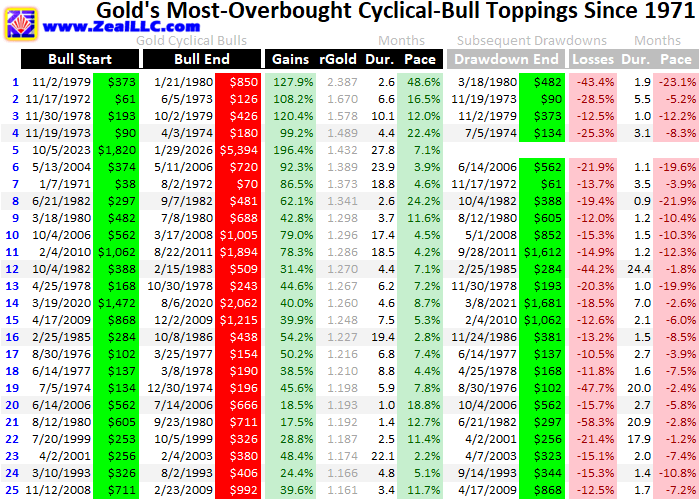
The only times dollar gold has ever been more overbought than last week were in monster-cyclical-gold-bull peaks into January 1980, June 1973, October 1979, and April 1974. The subsequent big-and-fast drawdowns weren’t pretty, averaging a savage 27.4% in just 2.9 months as I warned last week! Adding in the next-most-overbought bull after today’s doesn’t help much, as the other top five averaged 26.3% in 2.5 months.
Again expanding that to gold’s ten-most-overbought bull toppings excluding today’s to dilute the impact of January 1980’s bubble bursting, gold’s subsequent average drawdown was 20.7% over just 2.1 months. That’s remarkably close to that earlier 20.8% over 2.1 months which was the average vicious bear after the next-ten-largest cyclical gold bulls. That’s about how much and how fast gold is likely to plunge here.
A 21%ish drawdown in a couple months or so would hammer gold back down near $4,261 by late March. Again that would almost certainly translate into disastrous 42% losses for silver and 42% to 63% for the major gold miners’ stocks! I sure hope that doesn’t come to pass, but that’s what gold’s own half-century-plus history implies is probable. And this latest gold bull’s extremeness argues for even-bigger selloffs.
Again this was gold’s largest-ever cyclical bull by far, nearly tripling in just over a couple years! And that catapulted it to climaxing at its most-overbought levels in almost a half-century, soon after gold’s last popular-speculative-mania bubble burst! Often-proportional bears following huge bulls are necessary and healthy to rebalance extreme technicals and sentiment. That process takes a couple months, not a couple days.
Considering all this, I’d be shocked if gold doesn’t at least retreat 25% before this drawdown fully runs its course. Likely silver would double that, and major gold stocks would double to triple it. Gold would have to fall all the way back near $4,045 to hit a 25% drawdown. How far past monster super-overbought gold bulls fell relative to their 200dmas buttresses that target range, solidifying it relative to historical precedent.
Gold cyclical bears tend to maul it back down near or under its 200-day moving average. Midweek that is still way down near $3,797, but is rising at a rapid clip thanks to January’s frenzied gold chasing. It surged $178 in this past month, which would boost gold’s 200dma near $3,974 in a couple months if this steep 200dma ascent slope persists. That would make for a nice 200dma convergence around a 25% drawdown.
Gold’s ten-biggest cyclical bears since 1971 averaged brutal 37.2% drawdowns bottoming at just 0.889x gold’s 200dma! That sure sounds scary. But looking at the ten specific drawdowns following gold’s ten-most-overbought bull toppings excluding today’s clocked in at much-higher rGold bottomings near 1.059x. The caveat is these are cyclical bulls and bears measured by 10%+ closing swings, not broader secular ones!
As an example, gold’s most-extreme bull ever into January 1980 skyrocketed 127.9%. Its subsequent drawdown was again horrific at 43.4% over just 1.9 months. From there gold soared 42.8% in another cyclical bull, followed by a 12.0% correction. Then gold climbed another 17.5% before plunging a soul-crushing 58.3%. Through this entire secular-bear span from January 1980 to June 1982, gold plummeted 65.1%!
Gold doesn’t need to collapse so far after today’s much-milder popular speculative mania, but the entire drawdown might not happen in a single swing. Gold could fall 20%+ entering a bear, bounce back 10%+ formally ending it, then fall another 20%+ to a deeper low than the initial bear one. Today’s drawdown is far too young to start gaming more-complex multi-stage secular-bear scenarios, but another one is possible.
While drawdowns following monster gold bulls are totally fueled by necessary rebalancings of both extreme technicals and sentiment, traders use fundamental arguments to deny they are happening. This is also true into popular-speculative-mania toppings like last week. The great dangers of exceedingly-stretched technicals and wildly-excessive greedy herd sentiment are ignored as prices soar, based on fundamentals.
So whenever I warn about major toppings before bulls peak, like on gold’s China takeover just a couple weeks ago, my inbox fills with fundamental reasons why this time it’s different. Incidentally those are the most-dangerous words in market history, leading to catastrophic losses and ruin for countless traders who chased manias to buy in super-high. Bullish traders drinking the mania Kool-Aid cited three key arguments.
Just before gold peaked, they claimed it would keep powering higher because of ongoing strong demand from world central banks, China, and India. Overnight into last Thursday the 29th when gold crested, the World Gold Council released its latest quarterly Gold Demand Trends report. These fantastic reads have long offered the best-available data on global gold supply and demand, revealing underlying fundamentals.
Gold’s record cyclical bull encompassed late 2023 and all of 2024 and 2025. Gold’s calendar-year gains over these last three years accelerated dramatically, running 13.1%, 27.2% and 64.3%! If fundamentals rather than speculative fervor were gold’s primary driver, demand should’ve grown dramatically over this span right? Yet that’s certainly not what the WGC’s annual totals reveal, with 2025’s just reported last Thursday.
Global central-bank gold demand in 2023, 2024, and 2025 clocked in at 1,050.8 metric tons, 1,092.4t, and 863.3t. Chinese consumer gold demand, which includes both investment and jewelry buying, ran 959.2t, 857.0t, and 830.3t in these same years. Indian consumer demand looked similar at 761.0t, 802.8t, and 710.9t. Notice the trend here? In all three fundamental cases 2025 proved the weakest of these past three years!
Supply-and-demand fundamentals in a giant worldwide slow-moving market like gold simply can’t shift anywhere near fast enough to justify prices nearly tripling in just over a couple years! They can’t explain gold skyrocketing 43%+ above its 200dma to a 46-year high in overboughtness. That’s all animal spirits, extreme herd greed manifesting in frenzied fear-of-missing-out buying. Popular speculative manias are all sentiment.
The subsequent big-and-fast drawdowns have to fall deep enough and run long enough to eradicate all of that. They aren’t driven by fundamentals any more than the soarings into extreme toppings are! So be wary of fundamentals being used to argue that gold’s selloff has already ended or soon will, so you should rush to buy the dips. Reckonings after extreme bulls take lots of selling and plenty of time to finish their work.
Successful trading demands always staying informed on markets, to understand opportunities as they arise. We can help! For decades we’ve published popular weekly and monthly newsletters focused on contrarian speculation and investment. They draw on my vast experience, knowledge, wisdom, and ongoing research to explain what’s going on in the markets, why, and how to trade them with specific stocks.
Our holistic integrated contrarian approach has proven very successful, and you can reap the benefits for only $10 an issue. We extensively research gold and silver miners to find cheap fundamentally-superior mid-tiers and juniors with outsized upside potential. Sign up for free e-mail notifications when we publish new content. Even better, subscribe today to our acclaimed newsletters and start growing smarter and richer!
The bottom line is gold is in for a serious drawdown after one of its most-extreme cyclical bulls ever. It was dollar gold’s largest bull on record by far, skyrocketing to gold’s most-overbought levels since just after January 1980’s notorious bubble. That reckoning is already underway, kicking off with gold’s third-worst daily plummeting ever. But history argues these rebalancing selloffs require more depth and time.
Excluding this latest monster record bull, the ten-biggest and ten-most-overbought cyclical-bull toppings since 1971 averaged subsequent big-and-fast drawdowns around 21% in just over a couple months. And 25% wouldn’t be surprising at all given gold’s first popular speculative mania since January 1980. That’s troubling enough for gold, but silver will likely double its losses while major gold stocks double to triple them.
*******
More from Gold-Eagle