
Gold SWOT: Pan African Resources Smashed Revenue Estimates


Strengths
- The best performing precious metal for the week was silver, up 8%. Silver continues to demonstrate its role as gold’s high-torque sidecar – climbing alongside bullion to as high as ~$79/oz as Middle East tensions and Federal Reserve uncertainty drive haven demand. With both monetary and industrial demand underpinning its rally, silver historically outpaces gold during sustained bull markets, offering investors amplified upside as the precious metals cycle matures, Bloomberg writes.
- Pan African Resources delivered exceptional H1 FY26 results with revenue surging 157.3% to $487.1 million, record profit of $147.8 million and a 50.3% EBITDA margin, driven by strong production gains across its portfolio and record gold prices which lifted its share price 14% this week. Pan African highlights the strength that comes from exposure to high-margin, growth-oriented gold producers, with the company guiding 275,000–292,000 oz for FY26 and pursuing multiple organic expansion projects to drive further production growth.

- Centerra Gold (CGAU) delivered a standout Q4 2025 beat, with adjusted EPS of $0.41 surpassing the $0.33 consensus estimate. Earnings more than doubled year over year from $0.17 in Q4 2024 and increased from $0.33 in Q3 2025, as elevated gold prices flowed directly to the bottom line. Centerra also exercised its pro rata participation rights in Thesis Gold’s C$44 million AngloGold Ashanti-led financing, subscribing for approximately C$5.7 million at C$2.79 to maintain its 9.9% ownership. The underlying project carries a PFS-level 54.4% after-tax IRR and a C$2.37 billion NPV at US$2,900 per ounce gold, ahead of a 2026 feasibility study. When a major such as AngloGold validates an asset with fresh capital and an existing strategic investor immediately maintains its stake, Centerra is building more than a mine operator. It is assembling an embedded optionality pipeline with leveraged upside to exploration success.
Weaknesses
- The worst performing precious metal for the week was gold, still up 1.4%. Gold remained a pillar of strength, pushing above $5,000 an ounce for a third consecutive day of gains as Middle East tensions and an uncertain Federal Reserve outlook sustained haven demand — yet among the precious metals complex, bullion posted the most modest advance.
- Royal Gold reported Q4 earnings, resulting in a decline in its share price this week while its peers posted further gains. The company guided Q1 2026 GEO sales flat with Q4 and indicated it would be the lowest quarter of the year, creating a near-term headwind for a stock priced for growth. Revenue per share rose both year over year and quarter over quarter. However, the primary concern is capital commitment risk. Royal Gold still needs to fund $100 million for its Warintza stream in two tranches over the coming months, continues to incur costs on the Hod Maden joint venture it is attempting to restructure, and faces a potential $225 million outlay to convert its MARA royalty into a stream, all while carrying debt that will not be fully repaid until early 2027.
- Newmont, the world's largest gold miner, warned that 2026 production is expected to decline roughly 10% due to planned mine upgrades — a supply-side signal that operational headwinds and rising costs across the industry remain a structural drag on margins, even as gold prices press above $5,000
Opportunities
- Wheaton Precious Metals Corp’s $4.3 billion acquisition of BHP Group’s additional 33.75% silver stream at Antamina Mine doubles its silver exposure, adding roughly 6–7.5 million attributable ounces annually and supporting GEO growth to 1.2 Moz by 2030. At current silver prices, the incremental production adds approximately $225–240 million in annual revenue, underpinning management’s $3.2 billion operating cash flow forecast for 2026. Investors should monitor the $2.4 billion net debt load taken on to fund the deal. Management is showing a vote in confidence that the current silver prices are sustainable.
- Turkey’s Treasury sold 2027 gold-denominated bonds and gold-based sukuk backed by more than 30 metric tons of gold, reinforcing gold’s deepening role as a sovereign monetary anchor and reflecting sustained institutional appetite for hard-asset-linked debt as a hedge against currency volatility.
- The Supreme Court’s 6-3 IEEPA tariff ruling today—striking down Trump’s reciprocal and fentanyl-related tariffs—creates a compounding fiscal tailwind for gold: the Treasury faces a potential $175 billion refund liability that must be financed through additional debt issuance, layered on top of a structural trade deficit that already floods foreign reserve holders with dollars and drives them toward gold diversification. The Tax Foundation estimates U.S. households absorbed roughly $1,000 in tariff costs in 2025, with the ruling potentially cutting that burden nearly in half—but the fiscal hole left behind only deepens the sovereign borrowing trajectory. More debt, a weaker dollar, and rising questions about U.S. fiscal credibility reinforce the structural bull case for bullion.
Threats
- Sudan’s Ministry of Minerals signed a cooperation agreement with a subsidiary of the Saudi Gold Refinery Company focused on gold exploration, broader mineral development, and upgrading mining infrastructure. While the pact aims to increase production and strengthen Sudan’s mining capacity, it deepens Saudi access to primary gold supply through a country with significant geopolitical and operational risk—flagging the growing pattern of Gulf sovereign capital moving to secure upstream precious metals exposure in frontier jurisdictions, which could introduce new competitive dynamics into African gold supply chains and raise questions about Western investment access to the same assets.
- From a fundamental standpoint, Bank of America sees total gold production in 2026 lower by 2% to 19.2 million ounces for the 13 North American precious metals stocks in their coverage, with consensus approximately 2% too high for 2026 production estimates. Average all-in sustaining costs (AISC) are seen rising 3% to $1,600/oz in 2026, and cost drift remains a feature of the current gold market as producers increasingly chase incremental, lower-margin material. With margins remaining strong given elevated gold prices, the sector appears focused on growth with cost control a lower priority—a dynamic that could blunt free cash flow generation if spot prices correct materially from current levels, according to UBS.
- Persistent Federal Reserve hawkishness poses a headwind for gold, as Governor Stephen Miran dialed back calls for deep rate cuts amid stronger-than-expected economic data — with higher-for-longer rates elevating the opportunity cost of holding non-yielding bullion and risking a reversal of the haven bid should geopolitical tension de-escalate faster than markets anticipate.
********
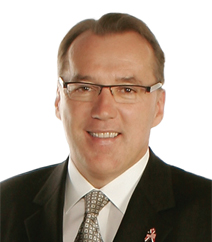 Frank Holmes is the CEO and Chief Investment Officer of U.S. Global Investors. Mr. Holmes purchased a controlling interest in U.S. Global Investors in 1989 and became the firm’s chief investment officer in 1999. Under his guidance, the company’s funds have received numerous awards and honors including more than two dozen Lipper Fund Awards and certificates. In 2006, Mr. Holmes was selected mining fund manager of the year by the Mining Journal. He is also the co-author of “The Goldwatcher: Demystifying Gold Investing.” Mr. Holmes is engaged in a number of international philanthropies. He is a member of the President’s Circle and on the investment committee of the International Crisis Group, which works to resolve conflict around the world. He is also an advisor to the William J. Clinton Foundation on sustainable development in countries with resource-based economies. Mr. Holmes is a native of Toronto and is a graduate of the University of Western Ontario with a bachelor’s degree in economics. He is a former president and chairman of the Toronto Society of the Investment Dealers Association. Mr. Holmes is a much-sought-after keynote speaker at national and international investment conferences. He is also a regular commentator on the financial television networks CNBC, Bloomberg and Fox Business, and has been profiled by Fortune, Barron’s, The Financial Times and other publications. Visit the U.S. Global Investors website at http://www.usfunds.com. You can contact Frank at: [email protected].